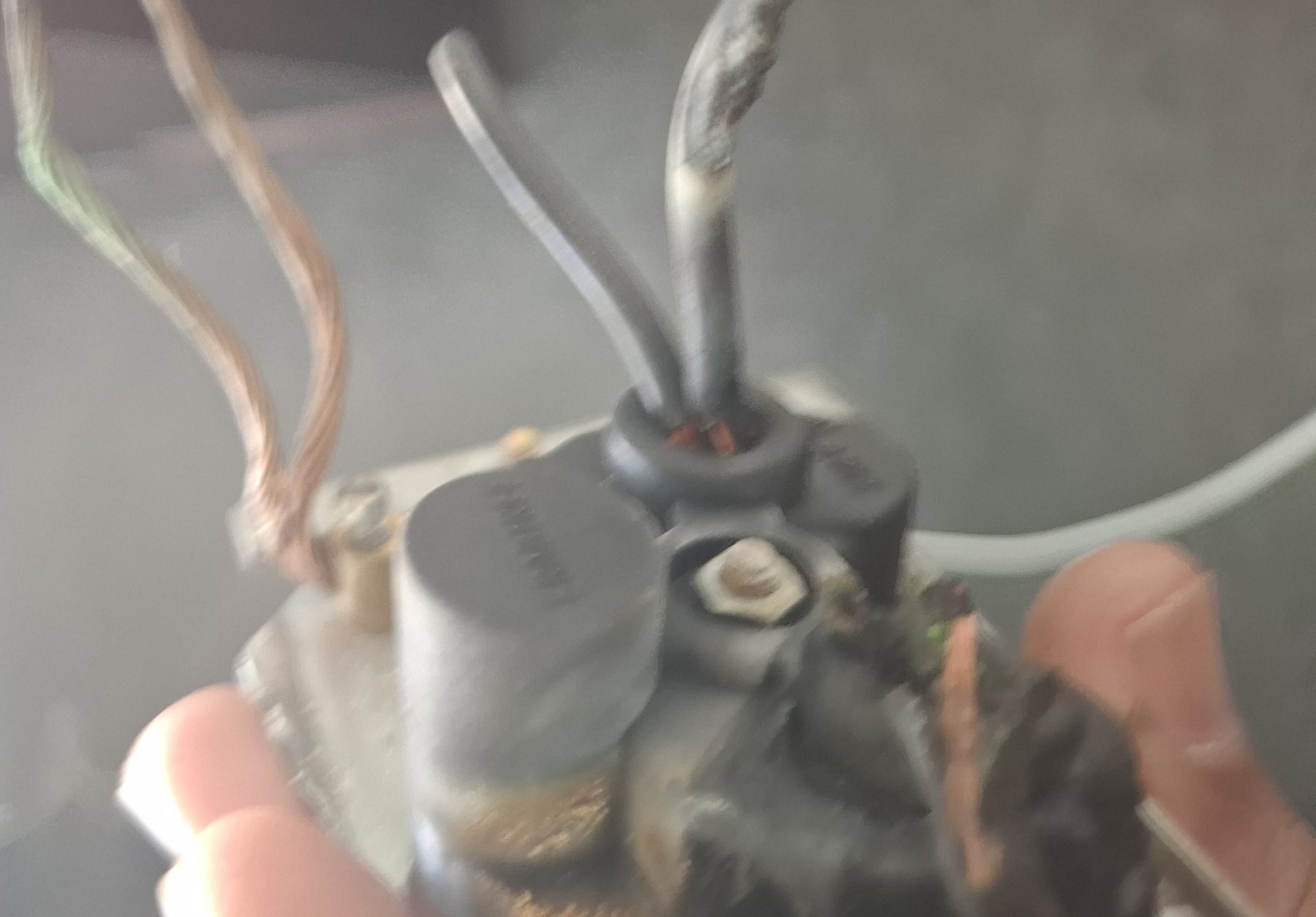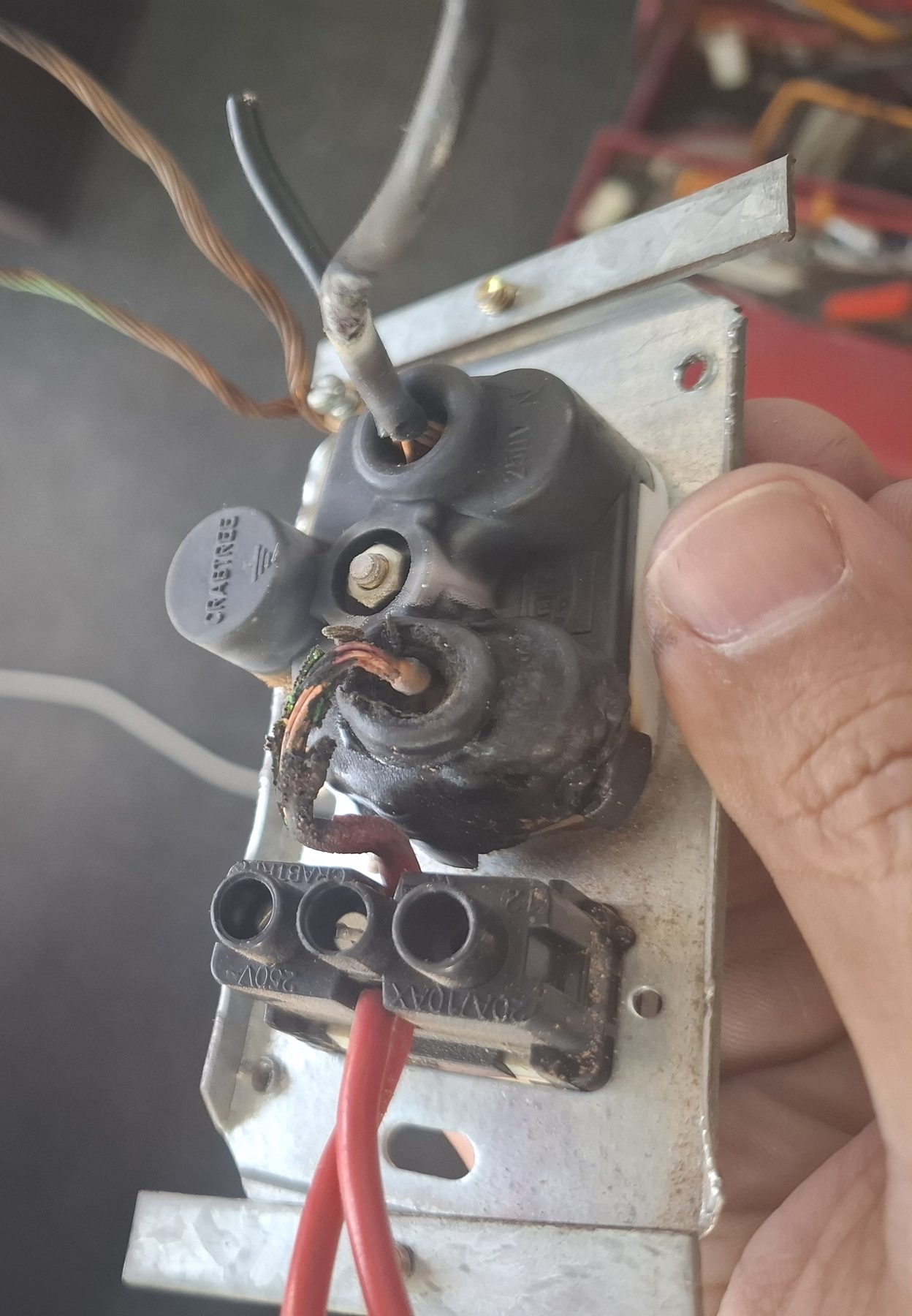
Melted and scorched terminal block removed from an overloaded circuit
← All insights
Electrical Safety

Overloaded Circuits: The Fire Risk Hiding Behind Your Distribution Board

Iron Leaf Electric July 2026 5-min read

Every circuit in your home or business is designed to carry a specific, limited amount of current. Plug in one appliance too many, run a heater and a kettle off the same extension lead, or simply let a building's power needs grow past what the wiring was ever designed for — and that circuit is overloaded. It's one of the most common electrical faults we come across, and one of the most dangerous. The fitting below came out of a real callout — this is what an overloaded connection actually looks like once you open it up.
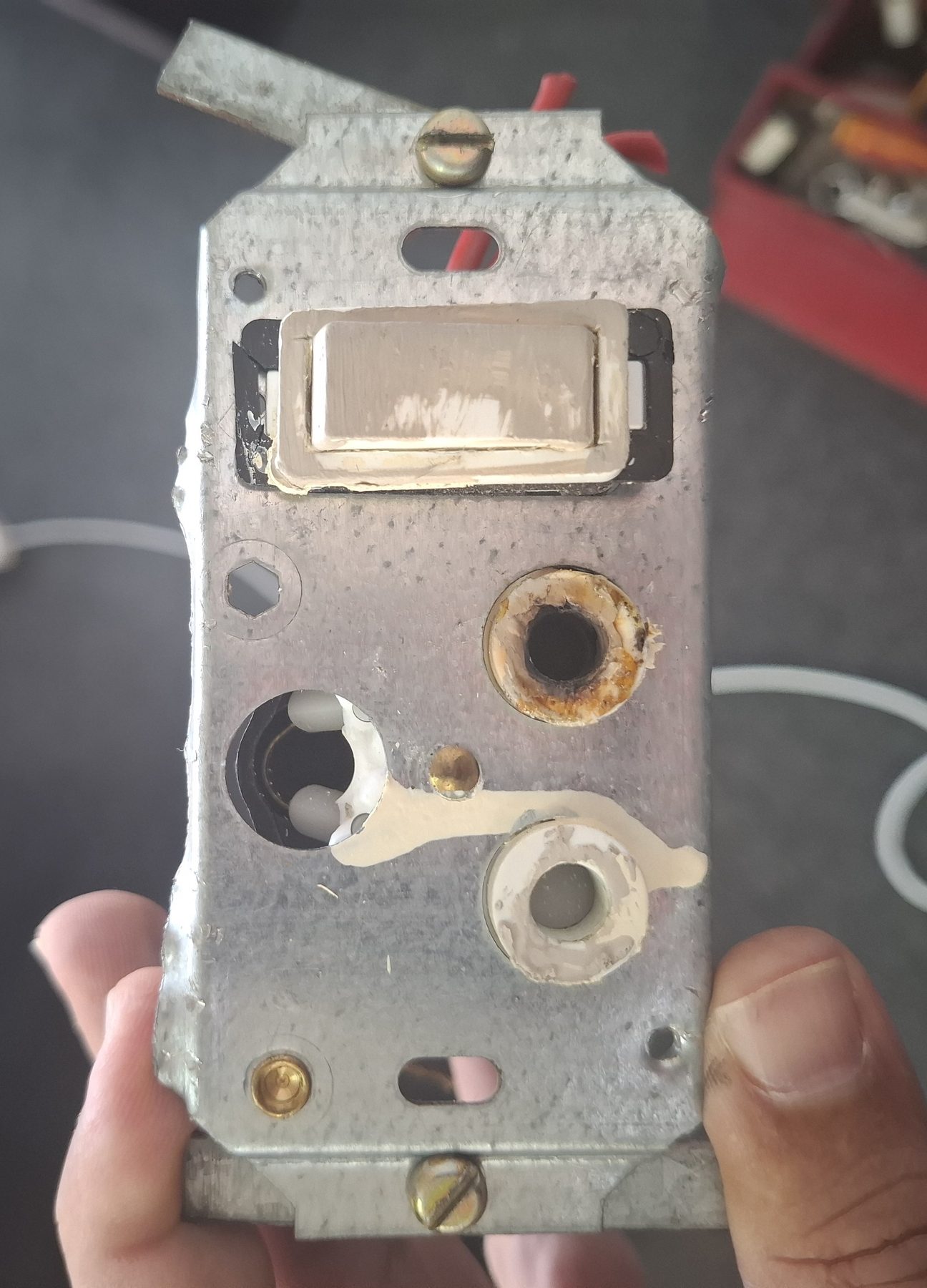

Switch and socket mounting box removed from the wall, showing heat damage and corrosion

The mounting box as removed on site — corrosion and heat staining visible around the terminals well before the fault was reported.

What actually happens when a circuit is overloaded.

Cables are rated to carry a maximum current safely, based on their size, the insulation around them, and how they're installed. Push more current through a cable than it's rated for and it starts to heat up — not the appliance, the cable and its connections, often buried inside a wall or box where that heat has nowhere to go.

Sustained heat breaks down insulation and corrodes terminals over time, exactly as pictured here. Once that breakdown sets in, you're left with a direct path to short circuits, arcing, and fire.
Overheating doesn't announce itself.

There's rarely a warning bell. A slightly warm plug point, a breaker that trips "for no reason," an extension cord that feels hot to the touch — these are the early signs, and they're easy to ignore because the lights are still on and everything still works. Behind the wall, though, the damage is already building.

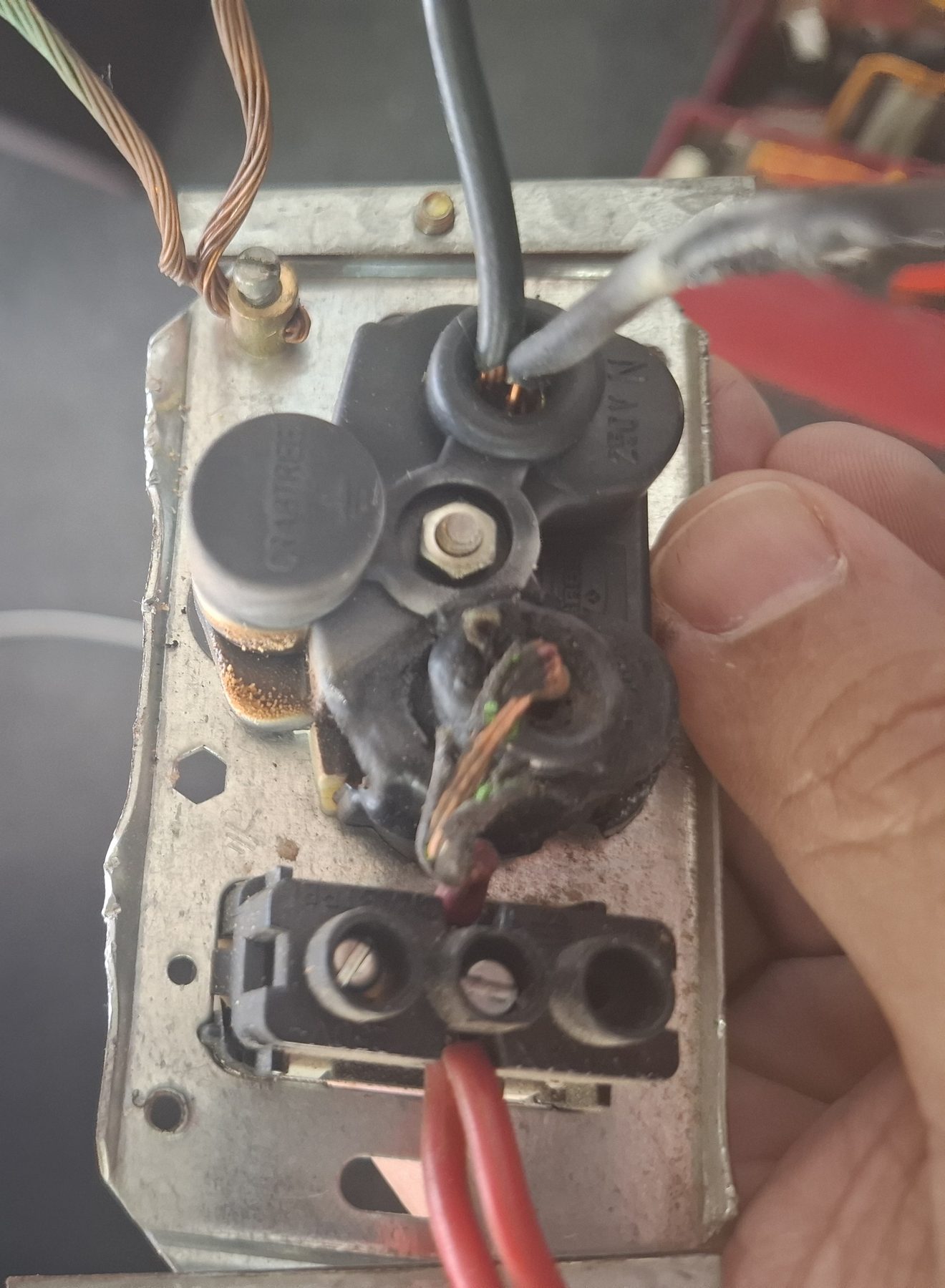
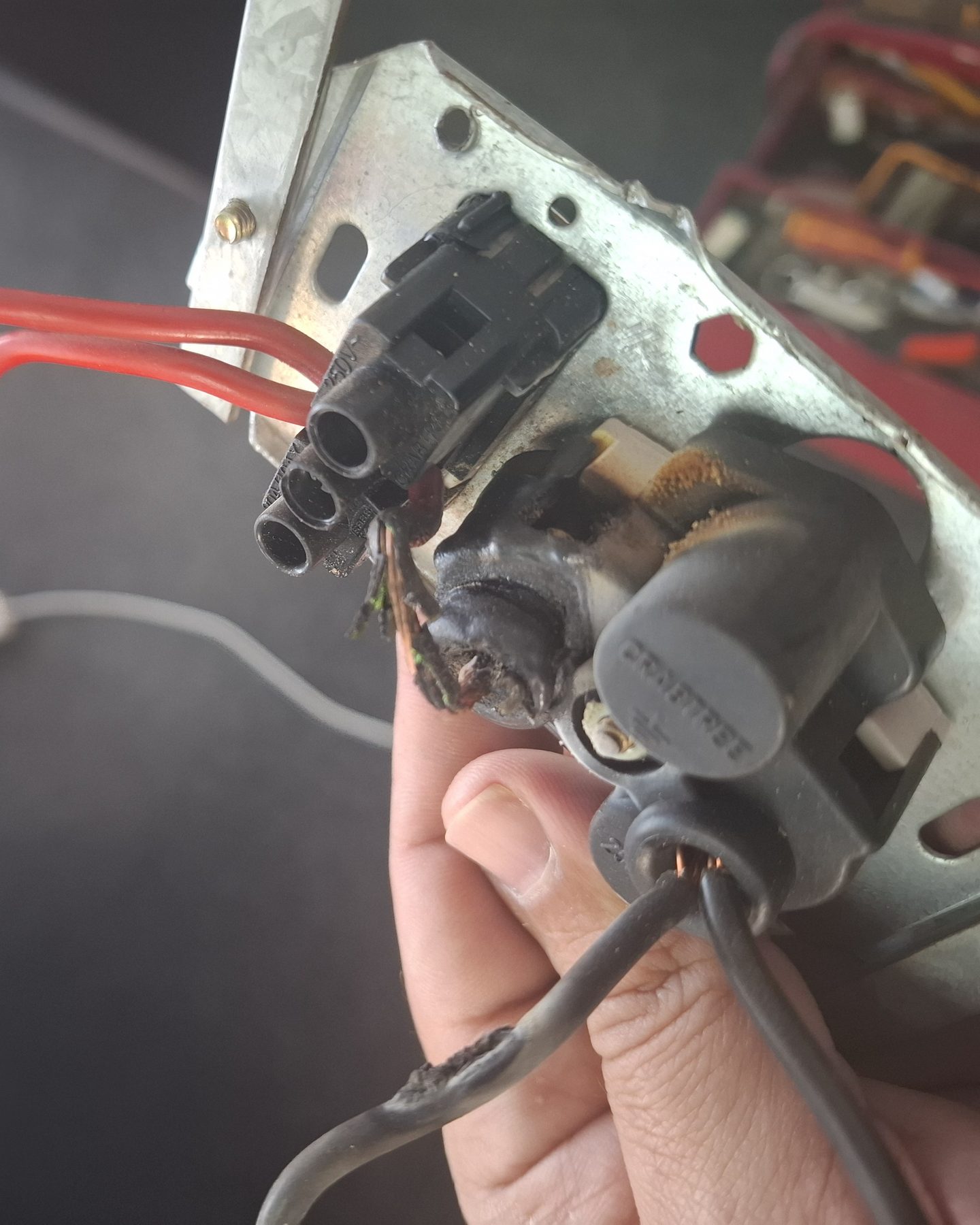
By the time a fitting looks like this — terminals corroded, insulation charred, plastic housing softened and discoloured from heat — the circuit has likely been running hot for a long time. Electrical faults remain one of the leading causes of structure fires in South Africa, and overload damage like this is a recurring factor behind them.

Close-up of a scorched terminal block with discoloured, corroded copper conductors

The terminal block from the same fitting — heat discolouration and corrosion on the conductors themselves.


Burnt wire connector removed from the mounting box Charred conductor tips exposed after removing the failed connector Melted terminal block housing

Left to right: the connector block showing heat and corrosion damage; charred conductor tips exposed once the connector was opened; the melted housing itself — softened and deformed by sustained heat, not physical damage.


A circuit breaker protects the cable — not the appliance.

This is the point people get backwards most often. A circuit breaker's job is to cut the power before the cable feeding a circuit is pushed past its safe current rating — it is sized to match the cable, not the equipment plugged into it.

Fit a breaker rated too high for the cable behind it, and the breaker will happily let dangerous, cable-damaging current flow without ever tripping — exactly the kind of slow, silent overload that produced the corrosion and heat damage pictured above. The classic case we see on site: a customer's breaker kept tripping under normal use, so someone — often not a qualified electrician — swapped it for a bigger one "to stop the nuisance." The tripping stops. The danger doesn't; it just moves further down the line, into the cable and connections themselves.

Fit a breaker rated too low, and you get the opposite problem: nuisance tripping under perfectly normal, safe load. Correct breaker selection means matching the breaker rating, its trip curve, and the cable size together — as a coordinated system, not as separate parts chosen in isolation.


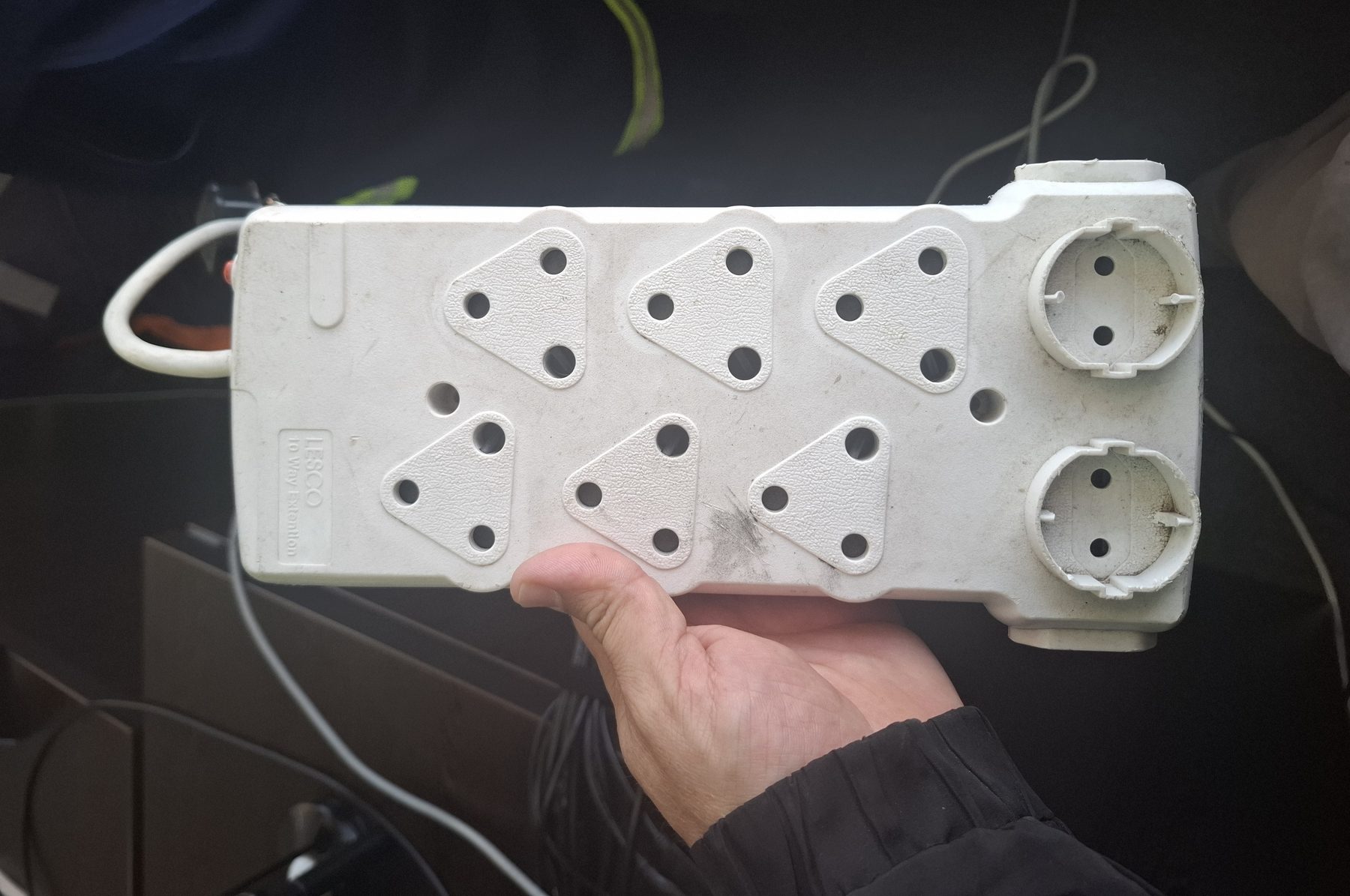
A ten-way multi-plug extension with six three-pin and two Schuko sockets

Ten sockets on one adaptor — every single one of them still shares the same 16 A rating back to the wall.

More sockets doesn't mean more capacity.

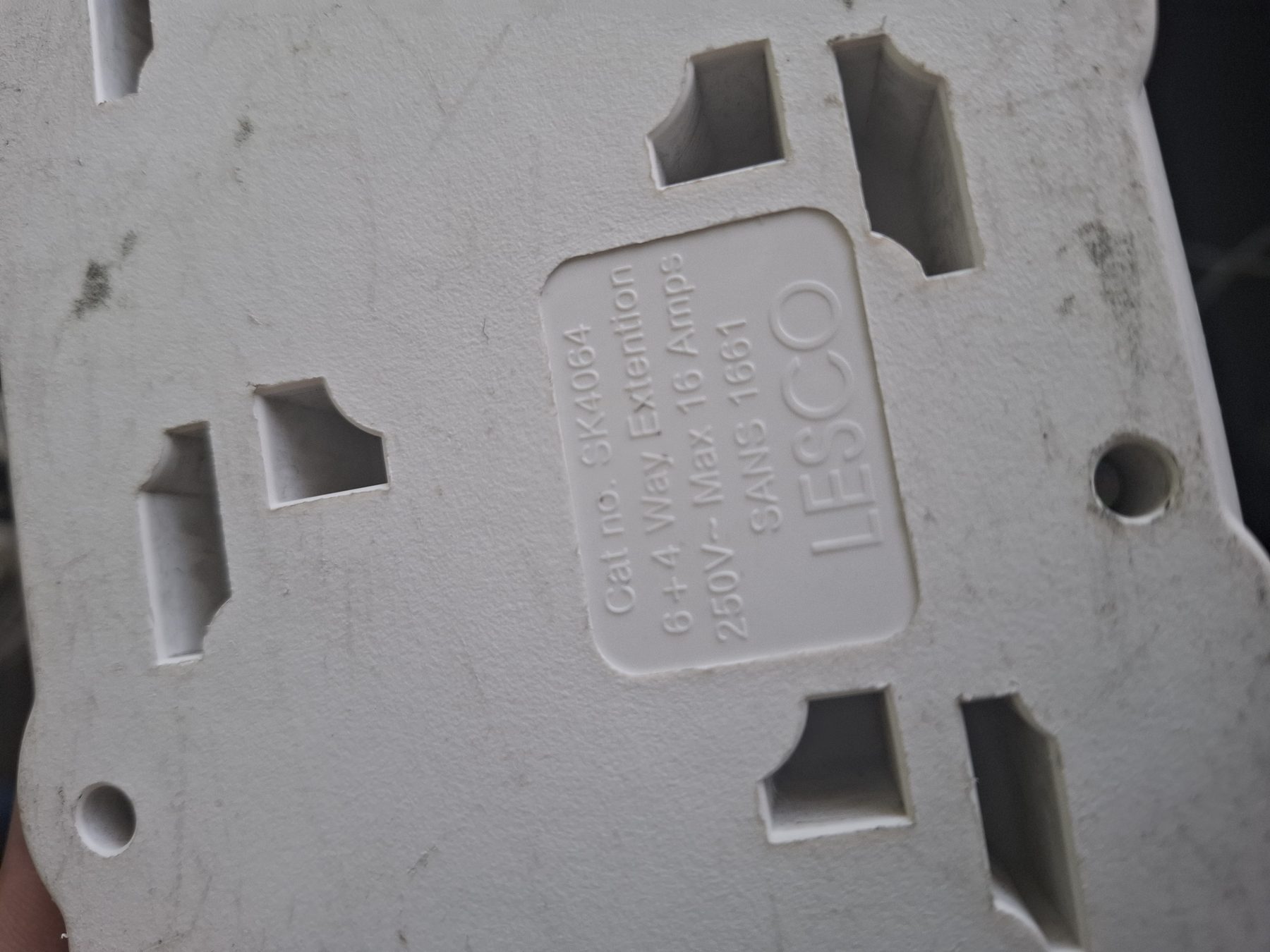
Multi-plug adaptors are one of the most overlooked overload risks we see. This particular unit gives you ten sockets to plug into — but its own rating label tells the real story: 250V, max 16 amps. That's the same limit as a single plug point. Ten sockets does not mean ten times the capacity, it just means ten places to draw current from one shared 16 A supply.

Load up several of those sockets at once with heaters, kettles, chargers, and other appliances, and the total draw can climb past that 16 A limit quickly — often without anyone realising, because there's no breaker built into the adaptor itself to stop it.

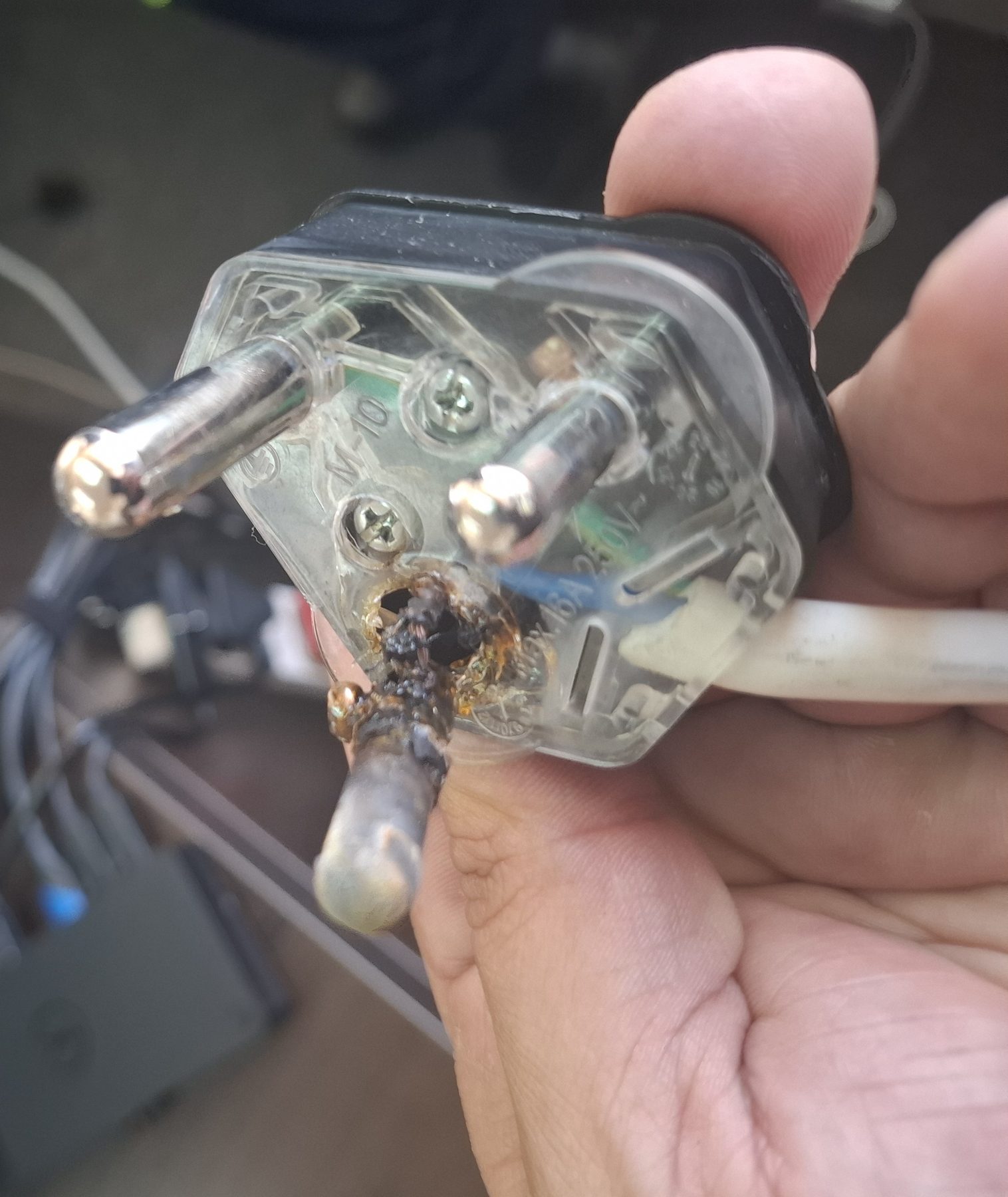
Close-up of the multi-plug rating label reading 250V, max 16 amps, SANS 1661 Burnt and melted plug top removed from a multi-plug adaptor after overload

Left: the rating label, plain as day — max 16 amps, regardless of socket count. Right: the result of ignoring it — a plug top from an overloaded multi-plug, pins scorched and the housing melted through.

Our advice

Treat a multi-plug adaptor as a way to reach more places, not a way to draw more power. If you find yourself consistently needing more sockets in one spot, that's a sign you need another properly wired, breaker-protected circuit — not a bigger multi-plug.

“A breaker that never trips isn't protecting anything. It just means the danger has moved further down the line.”
Iron Leaf Electric

When to call it in.

  • A breaker trips repeatedly under normal, everyday use.
  • Plug points, switches, or the DB itself feel warm to the touch.
  • Lights dim noticeably when another appliance switches on.
  • You've added air conditioners, geysers, or heavy appliances since the DB was last assessed.
  • Extension cords or multi-plugs are doing the job a proper circuit should be doing.
  • Anyone has "upgraded" a breaker on-site without an electrician confirming the cable behind it.
Our advice

Never respond to a tripping breaker by fitting a bigger one. A breaker that trips is doing its job — telling you the circuit is carrying more than it safely should. The fix is to find out why, not to silence the warning.


Correctly matched protection, front to back.

Overloaded circuits and mismatched breakers are two sides of the same problem: current flowing somewhere it was never designed to go, unchecked. Getting it right means assessing the actual load on a circuit, sizing the cable for that load with room to spare, and selecting a breaker that protects that specific cable — not just one that keeps the lights from tripping off.

Breaker tripping, or a DB that's never been assessed?

We check load, cabling, and protection together — not just the symptom.

Get in touch →