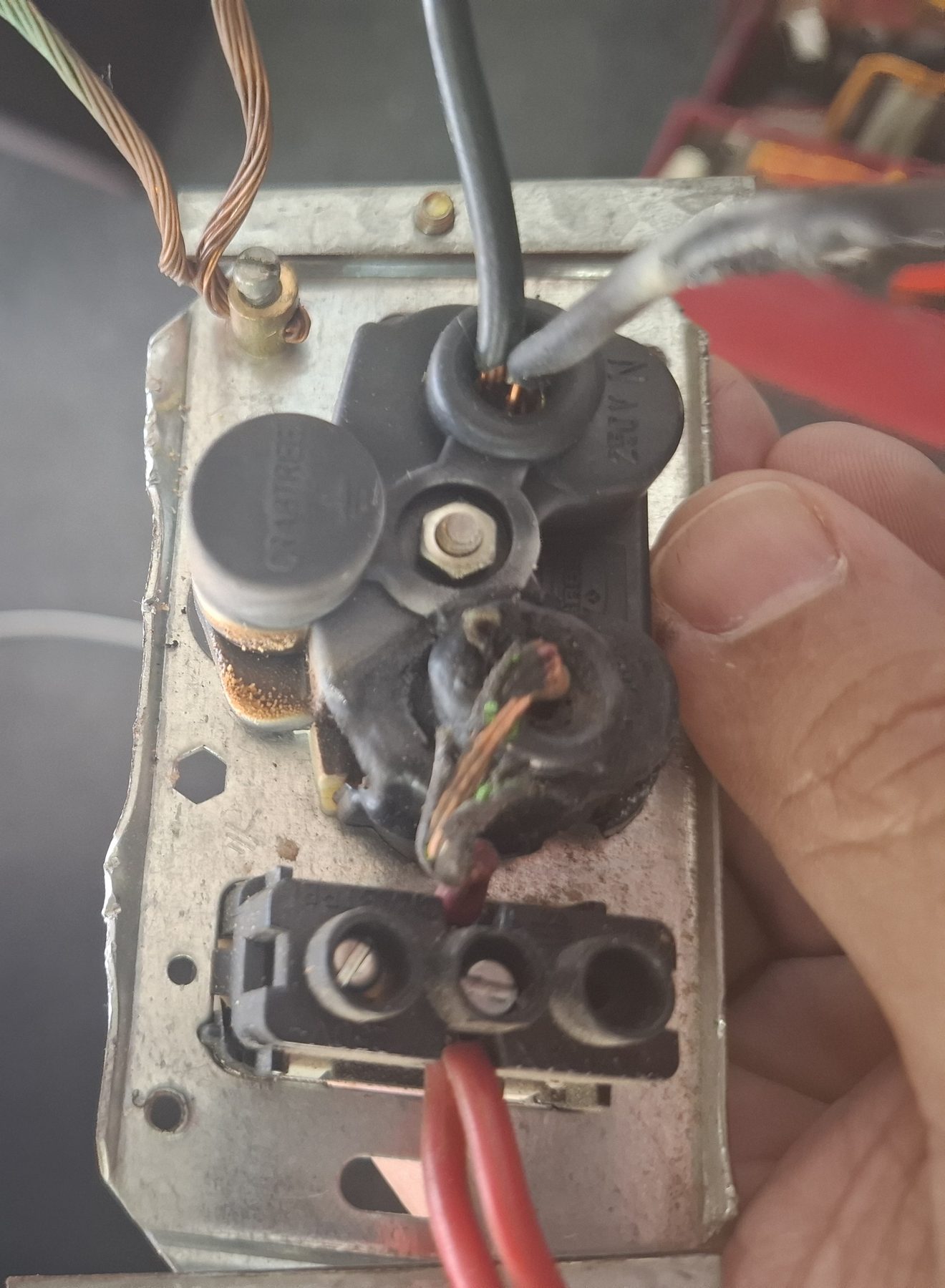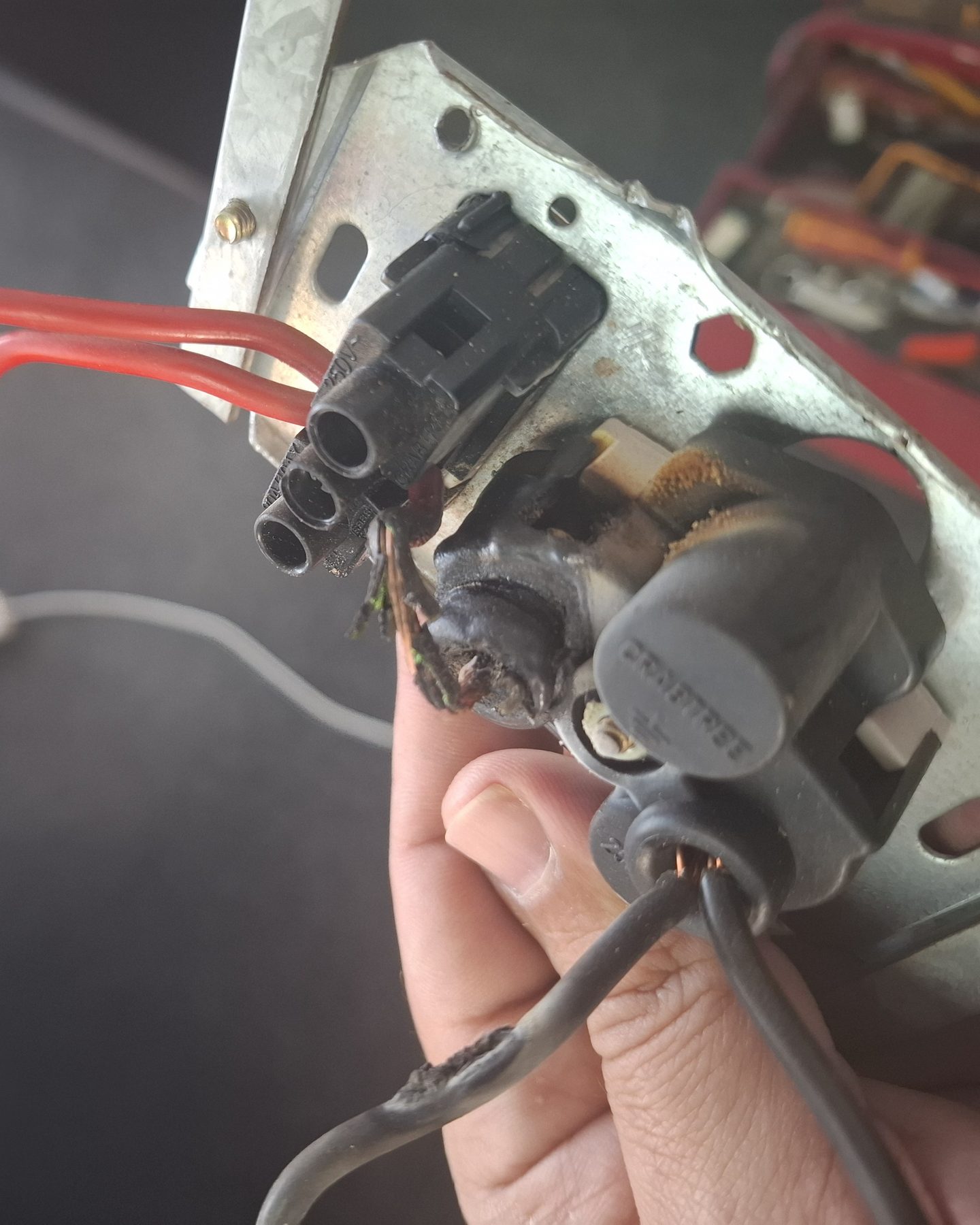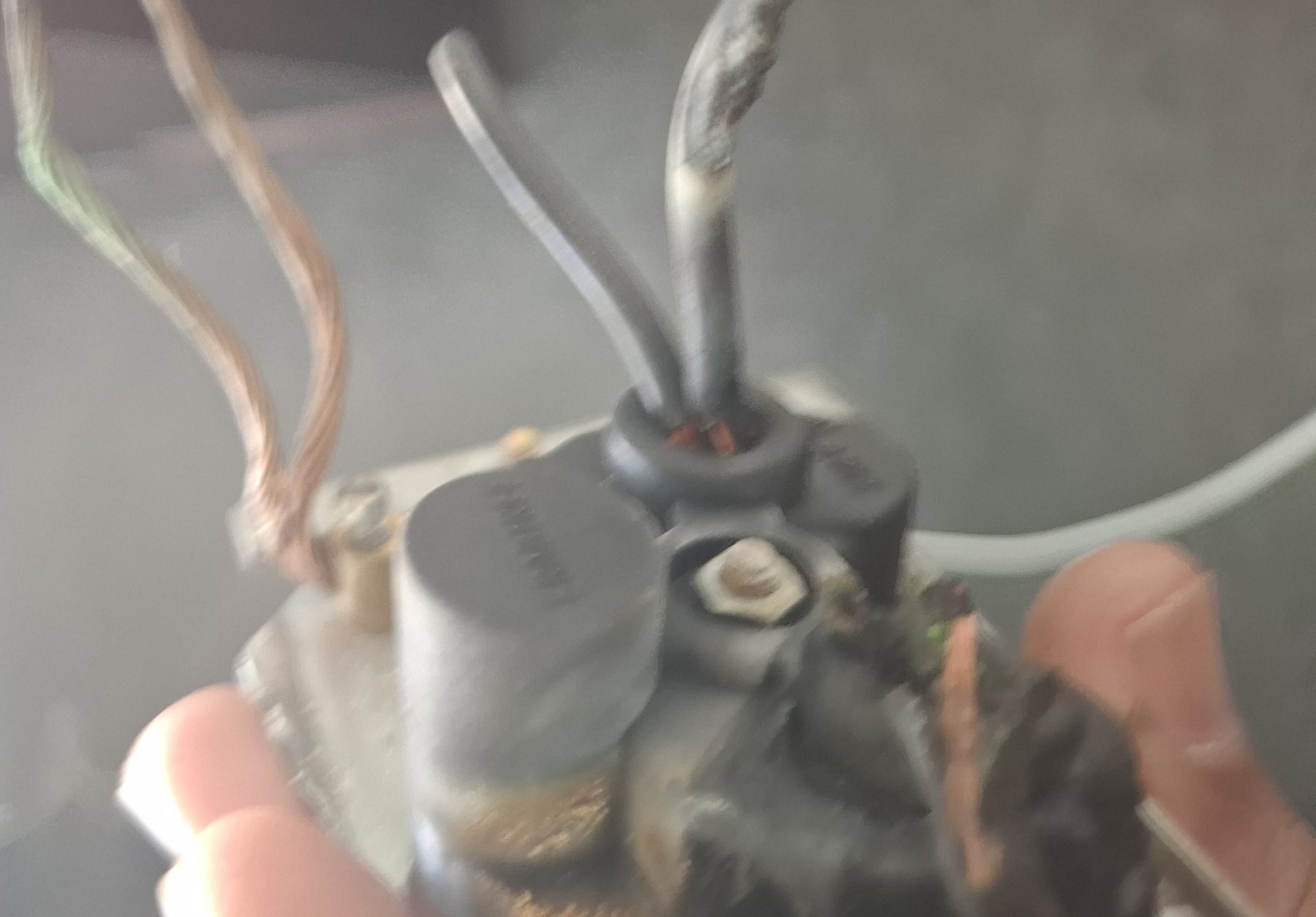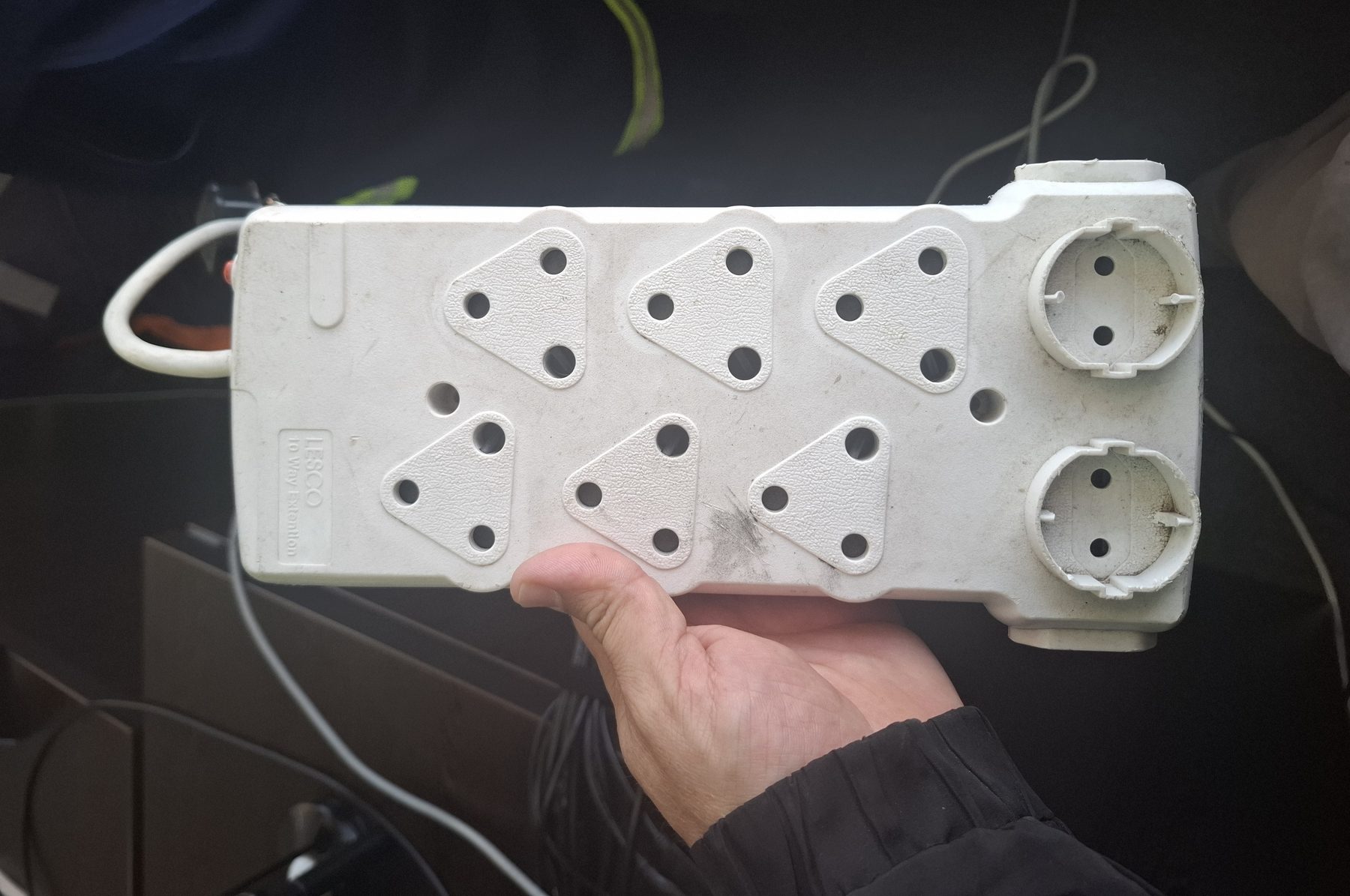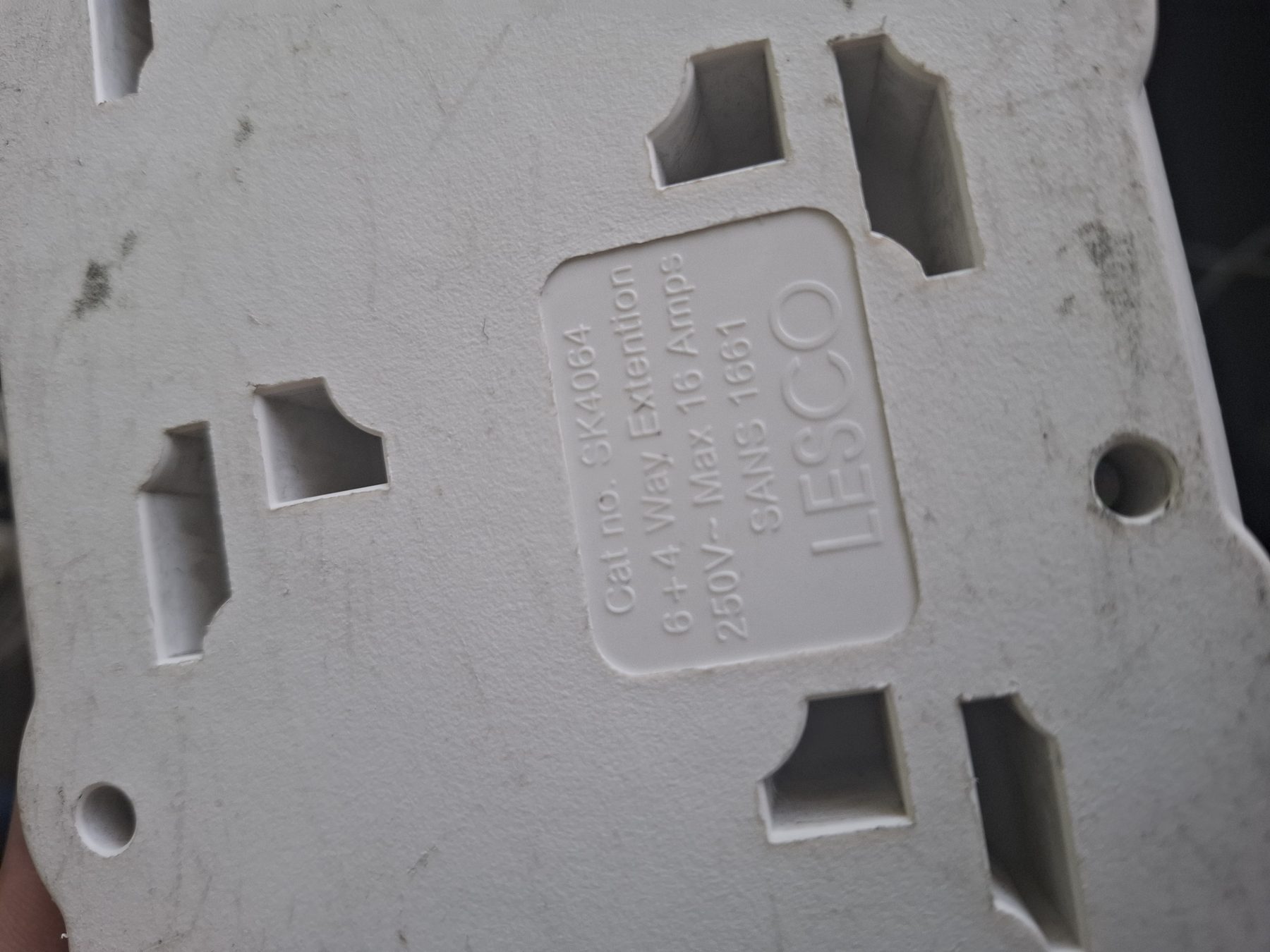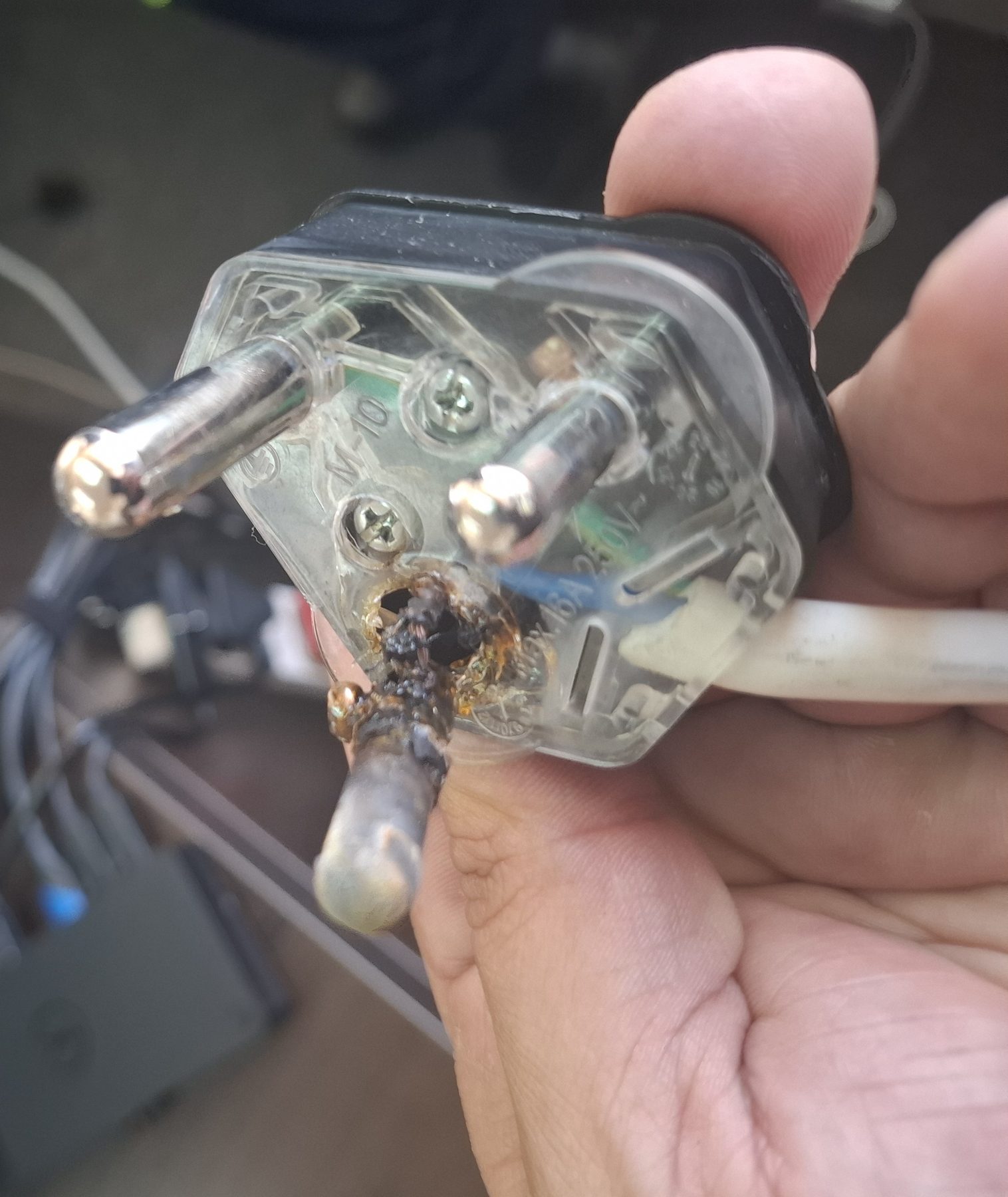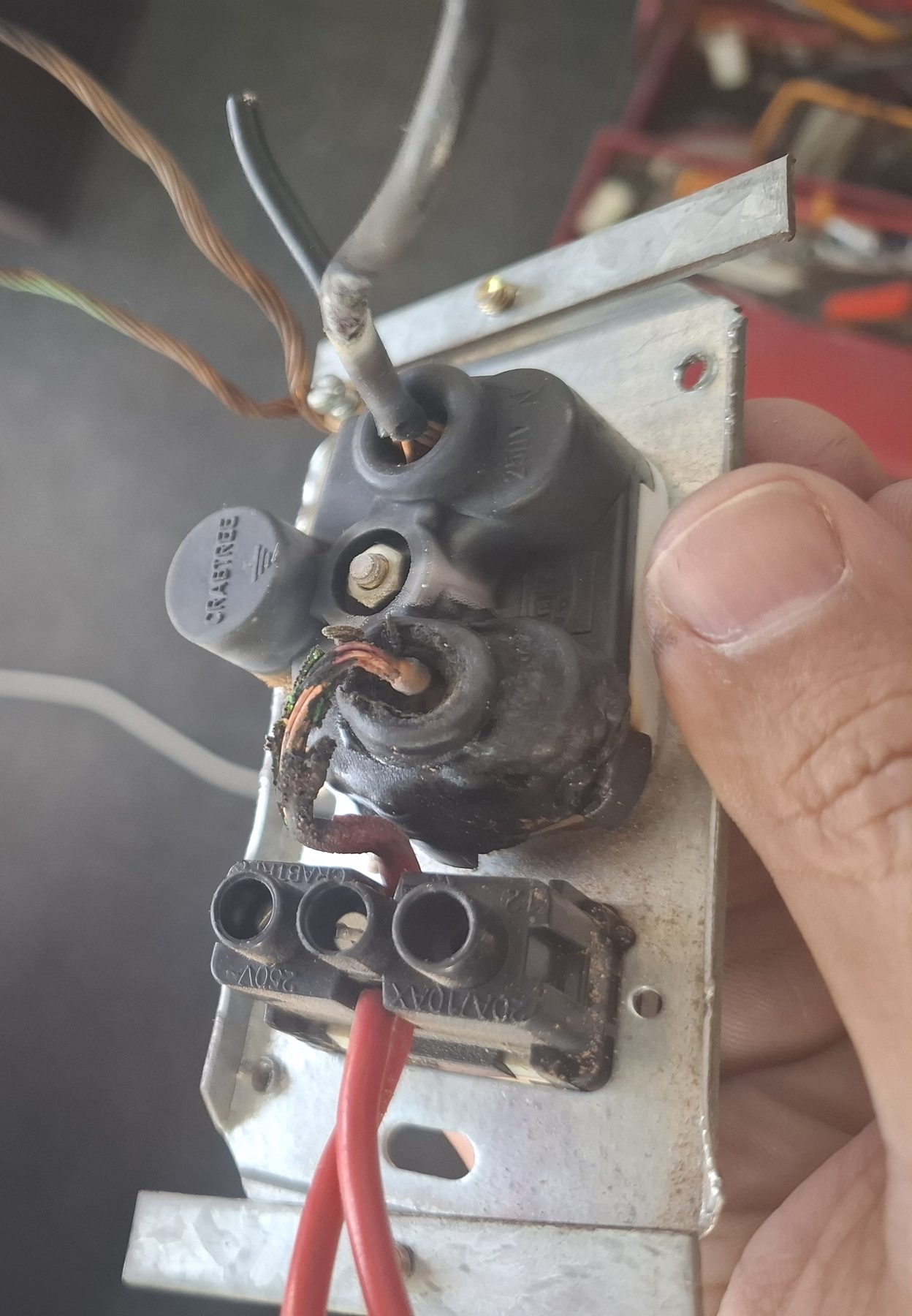
Every circuit in your home or business is designed to carry a specific, limited amount of current. Plug in one appliance too many, run a heater and a kettle off the same extension lead, or simply let a building's power needs grow past what the wiring was ever designed for — and that circuit is overloaded. It's one of the most common electrical faults we come across, and one of the most dangerous. The fitting below came out of a real callout — this is what an overloaded connection actually looks like once you open it up.
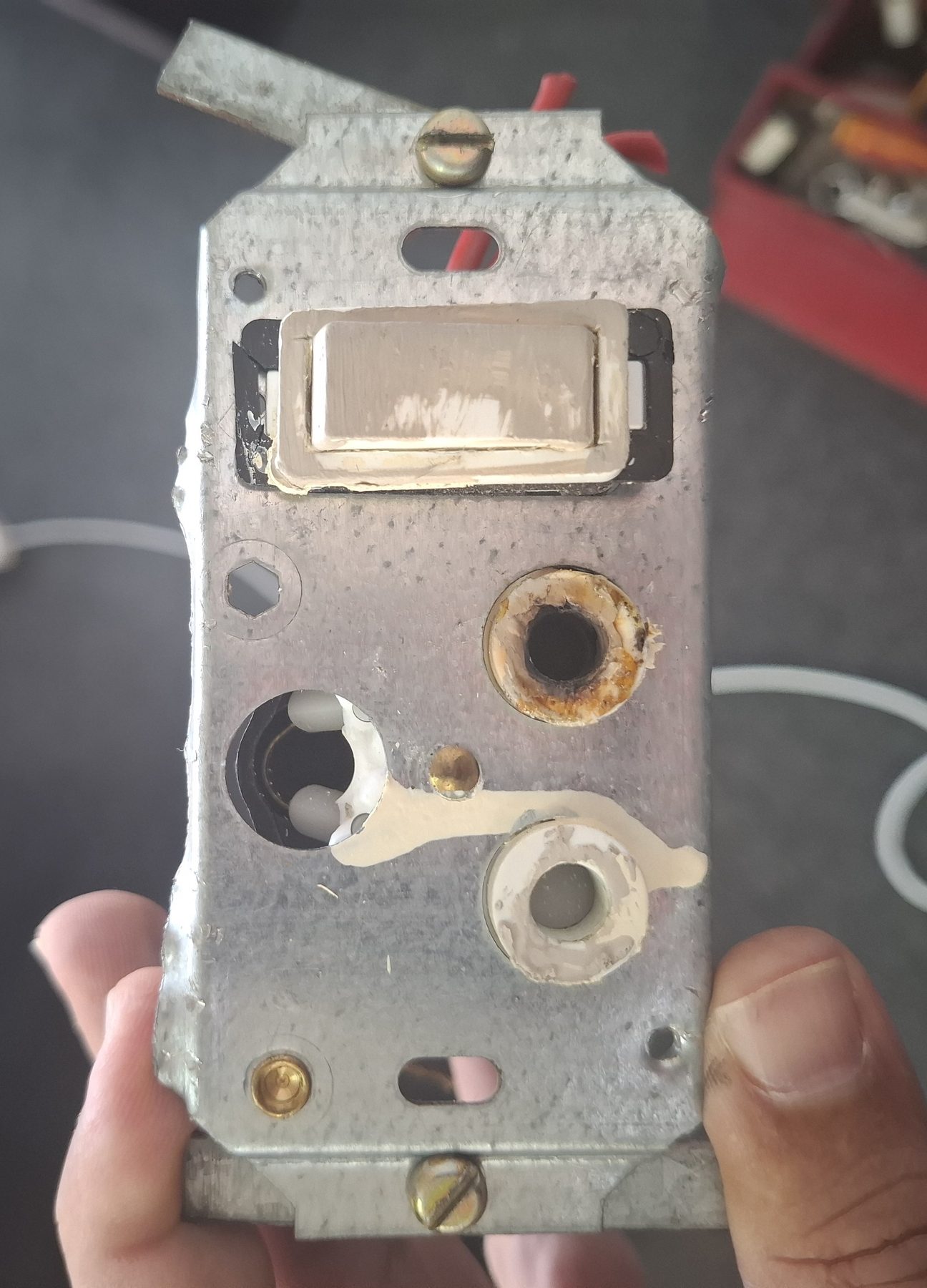
The mounting box as removed on site — corrosion and heat staining visible around the terminals well before the fault was reported.
What actually happens when a circuit is overloaded.
Cables are rated to carry a maximum current safely, based on their size, the insulation around them, and how they're installed. Push more current through a cable than it's rated for and it starts to heat up — not the appliance, the cable and its connections, often buried inside a wall or box where that heat has nowhere to go.
Sustained heat breaks down insulation and corrodes terminals over time, exactly as pictured here. Once that breakdown sets in, you're left with a direct path to short circuits, arcing, and fire.